Solutions

Seven waste streams. One platform.

End-to-end solutions that convert organic waste into products, energy and carbon assets — designed for governments, corporates and producers.

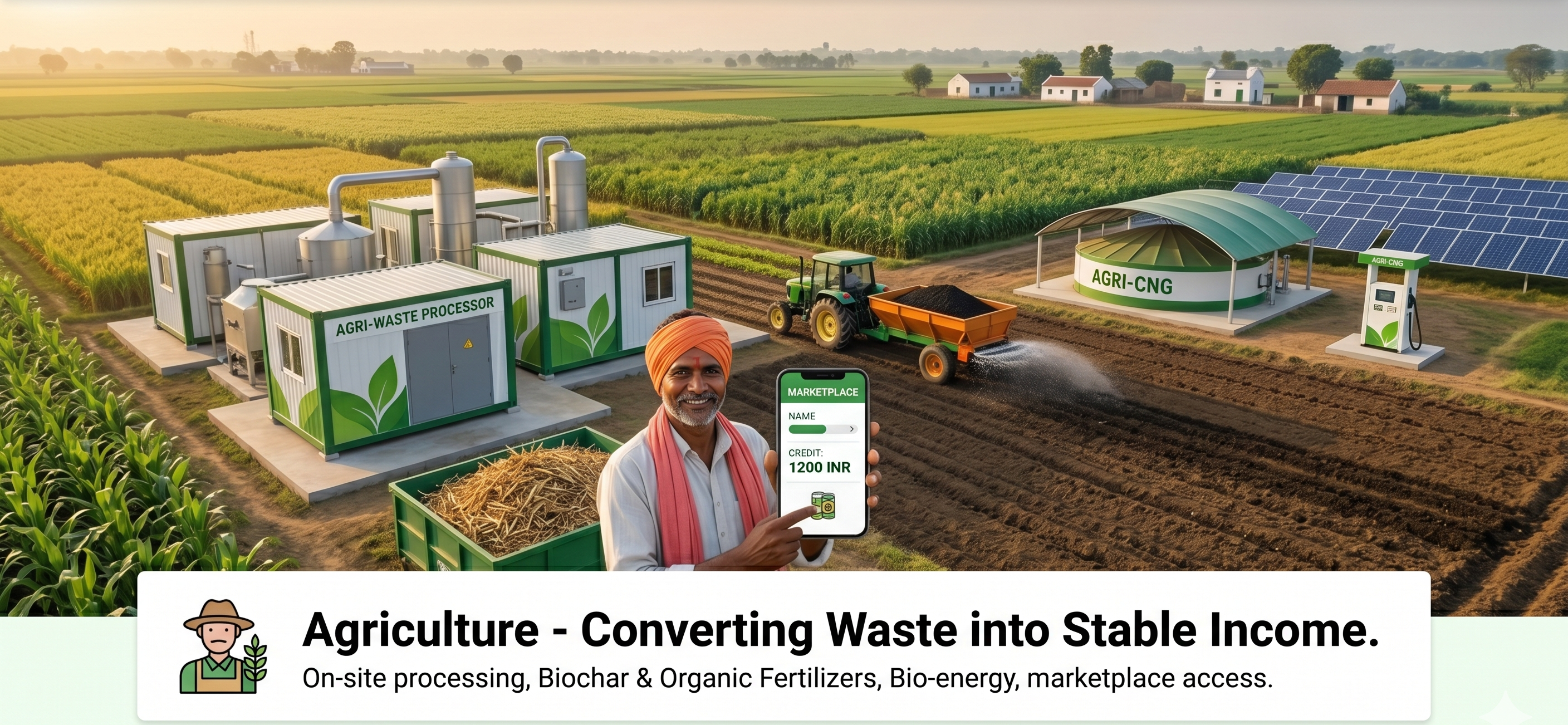
Agricultural Waste Management
STREAM 01

Agricultural Waste Management

The Challenge

India generates 500M+ tons of crop residue annually. Farmers often burn it — no buyers, high transport cost, no local processing.

  • Air pollution & soil degradation
  • Carbon emissions
  • Economic losses

Our Solution

  • Village collection centers
  • Regional processing hubs
  • Biochar production
  • Organic fertilizer
  • Carbon credit generation
  • Additional farmer income
Food Waste Management
STREAM 02

Food Waste Management

The Challenge

Hotels, restaurants, supermarkets and food processors generate enormous food waste — high disposal costs, odor, regulatory burden and methane emissions.

  • Disposal costs
  • Odor issues
  • Compliance burden
  • Methane emissions

Our Solution

  • Collection network
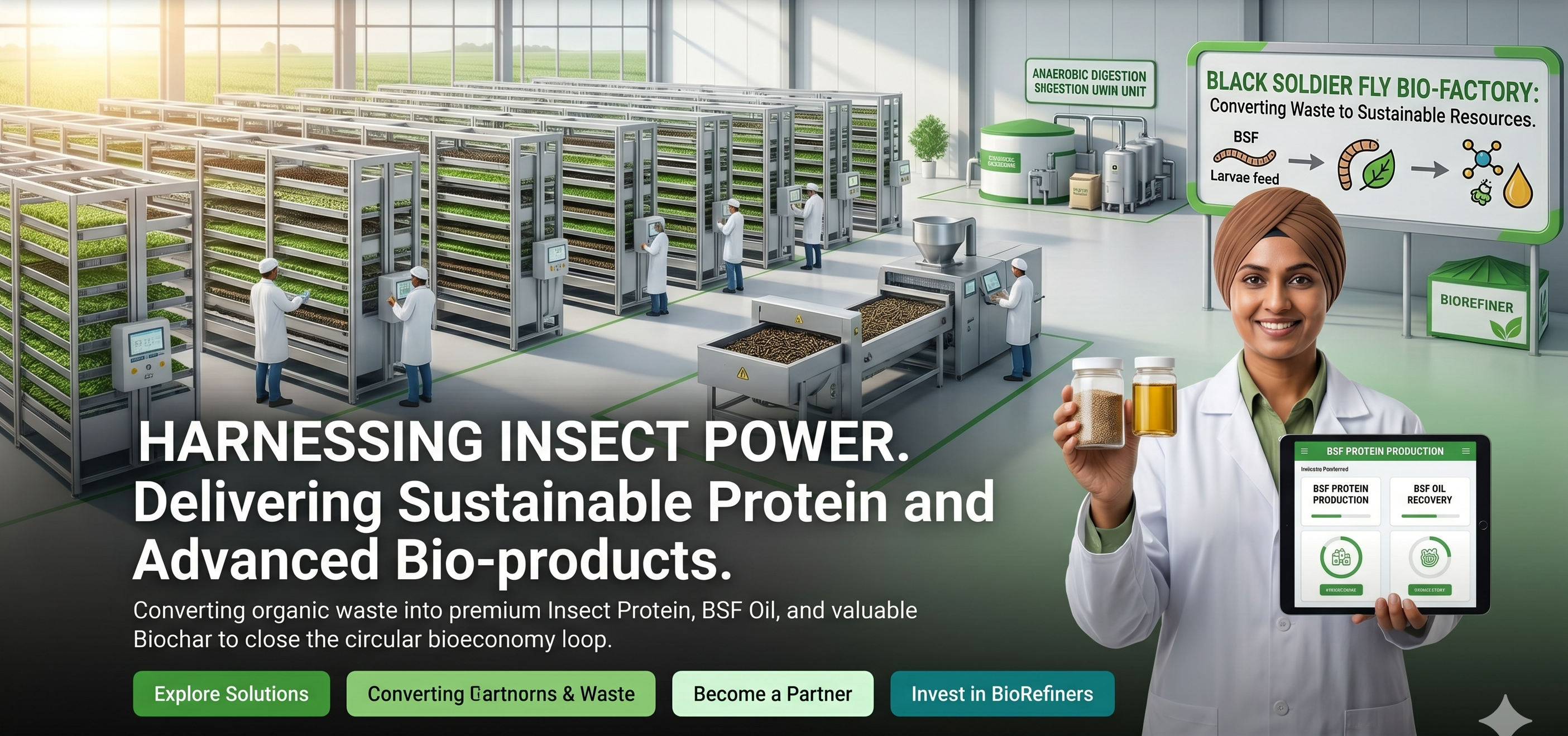
  • BSF processing
  • Biogas generation
  • Composting
  • Carbon accounting
  • Zero-waste programs
Poultry Waste Management
STREAM 03

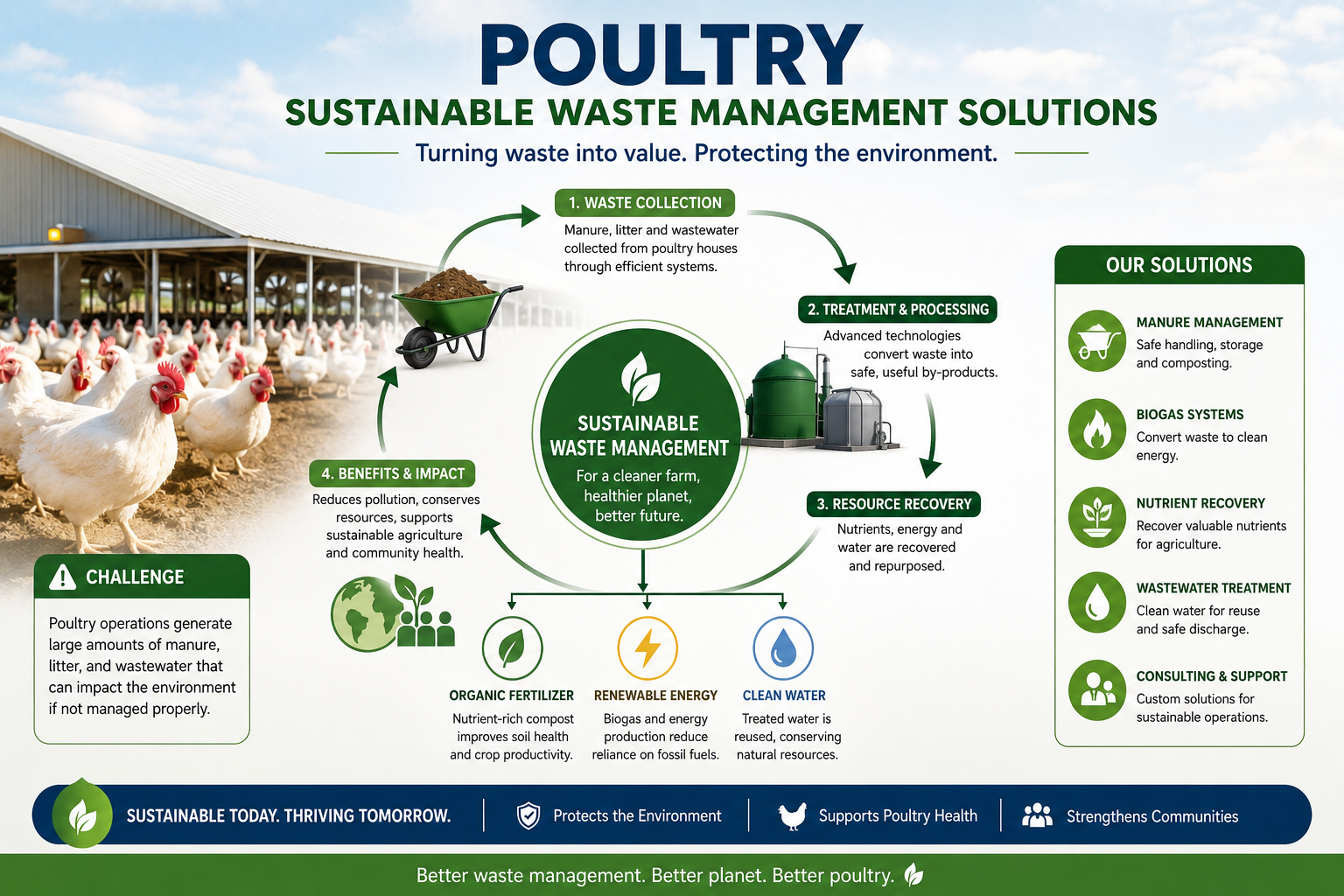
Poultry Waste Management

The Challenge

Poultry farms generate large volumes of litter and by-products that require compliant, sustainable processing.

  • Environmental concerns
  • Disposal logistics
  • Biosecurity risk

Our Solution

  • Litter collection
  • BSF protein conversion
  • Organic fertilizer
  • Energy recovery
Dairy Waste Management
STREAM 04

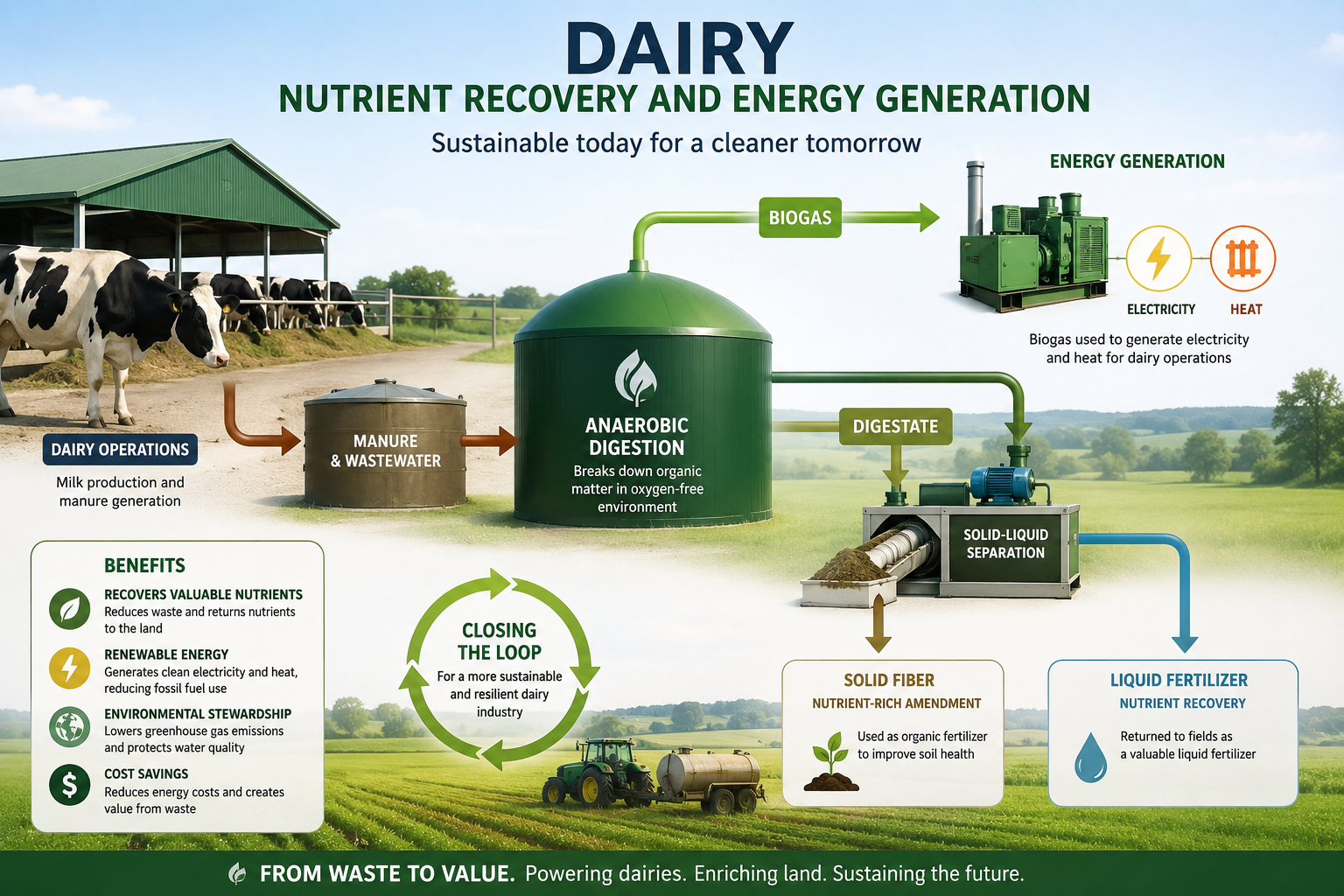
Dairy Waste Management

The Challenge

Dairy effluent and by-products represent both an environmental liability and an unrecovered nutrient stream.

  • Water pollution
  • Methane emissions
  • Lost nutrients

Our Solution

  • Effluent processing
  • Nutrient recovery
  • Biogas generation
  • Energy reuse
Municipal Waste Management
STREAM 05

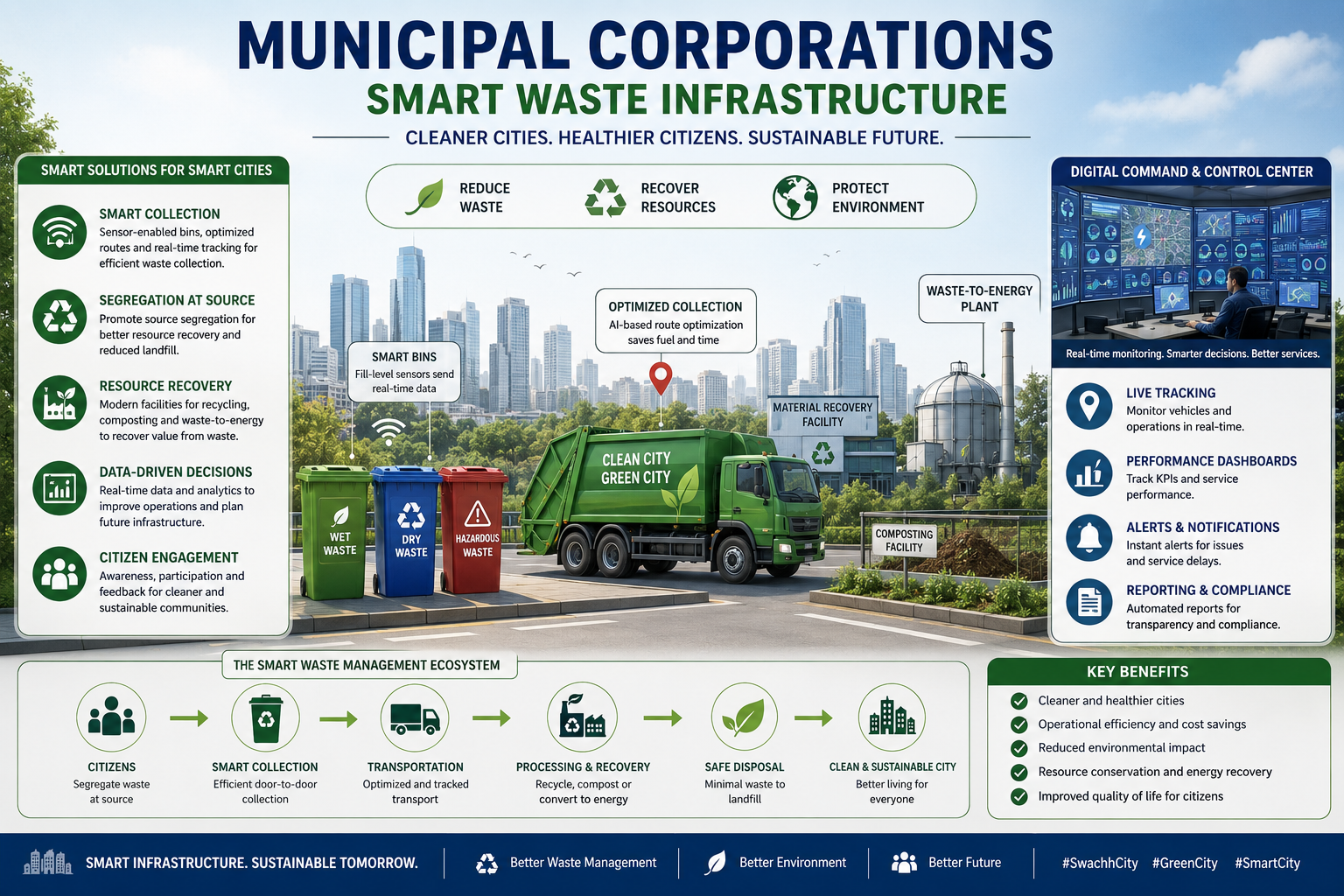
Municipal Waste Management

The Challenge

Municipalities face landfill overflow, rising collection costs, methane emissions and public-health concerns.

  • Landfill overflow
  • Rising costs
  • Methane emissions
  • Public health

Our Solution

  • Waste segregation
  • Organic processing
  • Bio-CNG production
  • Carbon credits
  • Data-driven monitoring
  • Smart-city implementation
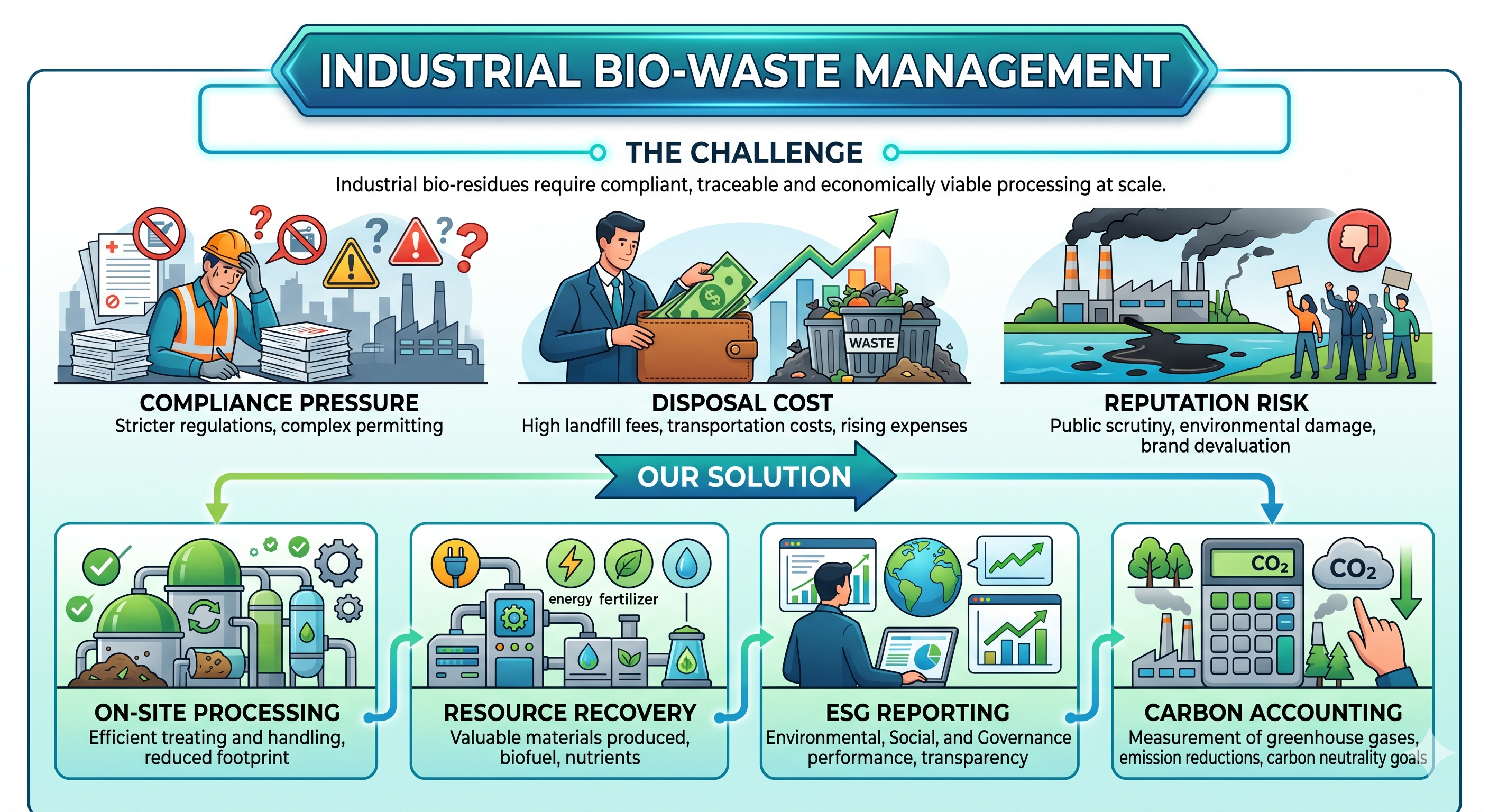
Industrial Bio-Waste Management
STREAM 06

Industrial Bio-Waste Management

The Challenge

Industrial bio-residues require compliant, traceable and economically viable processing at scale.

  • Compliance pressure
  • Disposal cost
  • Reputation risk

Our Solution

  • On-site processing
  • Resource recovery
  • ESG reporting
  • Carbon accounting
Carbon Solutions
STREAM 07

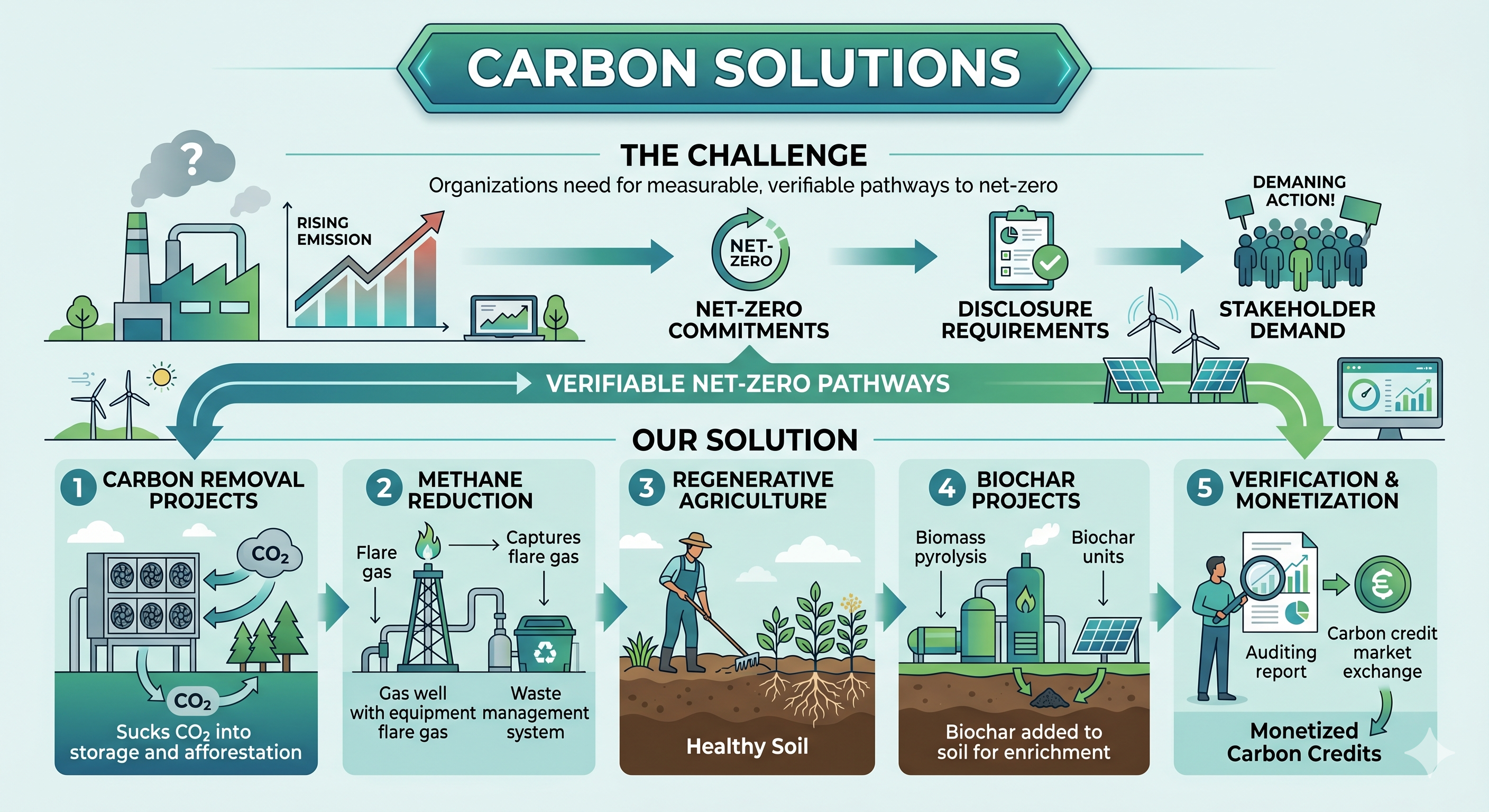
Carbon Solutions

The Challenge

Organizations need measurable, verifiable pathways to net-zero — from emissions accounting to credit monetization.

  • Net-zero commitments
  • Disclosure requirements
  • Stakeholder demand

Our Solution

  • Carbon removal projects
  • Methane reduction
  • Regenerative agriculture
  • Biochar projects
  • Verification & monetization
Rural Cleanliness Program

Cleaner Villages. Healthier Communities.

BioRefiners works directly with local rural institutions to establish waste-free environments and self-sustaining micro-bioeconomies.

Our Collaborations

We coordinate with Panchayats, Self-Help Groups (SHGs), Farmer Producer Organizations (FPOs), Farmer Groups, and Rural Entrepreneurs to implement distributed, local waste processing networks. This transfers economic value directly back to the villages.

01

Village Collection Centers

Local collection points managed by farmer groups for agricultural and domestic organic residues.

02

Community Composting

Jointly operated municipal and community units producing premium organic soil amendments.

03

Local Bio-Refineries

Small-scale decentralized processing units converting regional agricultural waste into biochar and energy.

04

Employment Opportunities

Creating green jobs locally, boosting rural household incomes, and training youth in clean-tech operations.

05

Waste-Free Villages

Working towards zero-landfill villages by closing the loop on agricultural, household, and cattle waste.